Automakers don’t build hearses. They never have. Funeral coaches, flower cars, and car-based ambulances are built by independent coachbuilders who take a luxury chassis — Buick, Cadillac, Lincoln, Mercedes, Rolls-Royce — and convert it to professional use.
Because hearses are built when ordered, each one is unique. A funeral home specified the features: drapes (style and color), casket compartment decor and lighting, sliding casket tables, external lighting and accents, exterior trim to match a limousine fleet, or custom coachwork tailored to a director’s tastes. Two coaches from the same builder in the same year rarely left the factory identical.
The builders below are the ones American funeral directors ordered from for over a century.
THE MAJOR AMERICAN COACHBUILDERS
SUPERIOR
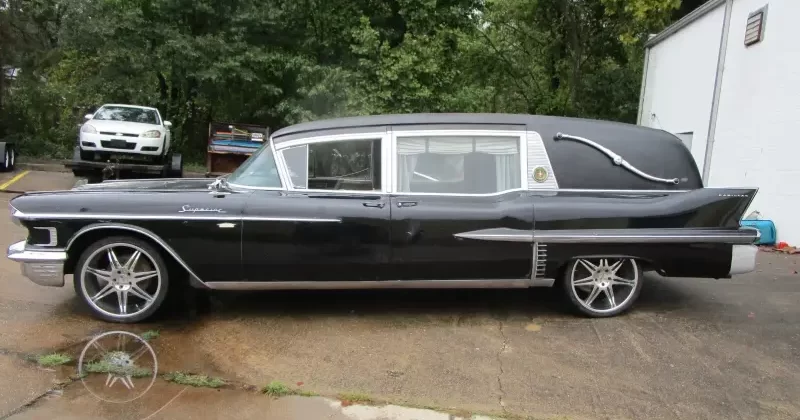
Superior’s roots run to 1915, when Garford Motor Truck moved its operations to Lima, Ohio. A group of Lima businessmen founded the Superior Motor Coach Body Company in 1923 to build bus bodies for Garford’s chassis — then switched to funeral cars in 1925, introducing a line of hearses and ambulances on purpose-built Studebaker and Cadillac chassis. Renamed the Superior Coach Company in 1940, the firm spent decades as the volume leader of the industry and became the brand-name hearse for generations of American funeral homes. Superior is now part of Accubuilt, which carries the name today.
S&S (SAYERS & SCOVILL)
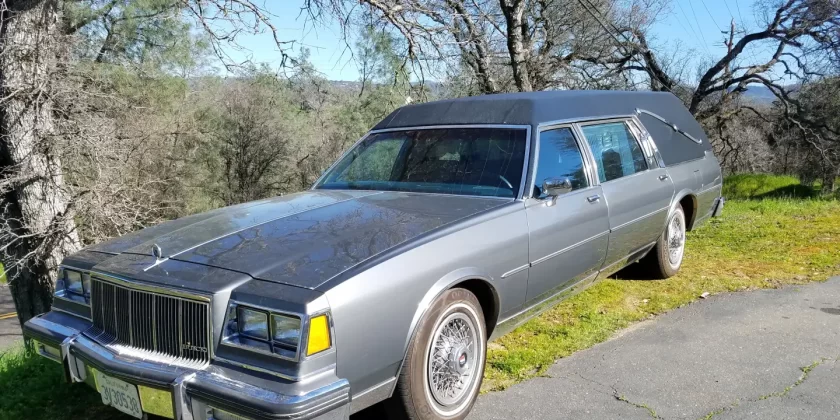
Founded in 1876 in Cincinnati as the Sayers and Scovill Company by William Sayers and A. R. Scovill, S&S began as a carriage builder and transitioned into motorized funeral coaches with the industry. The S&S name survived under successive corporate owners longer than nearly any other brand in the business, and it too lives on today under the Accubuilt banner.
MILLER METEOR
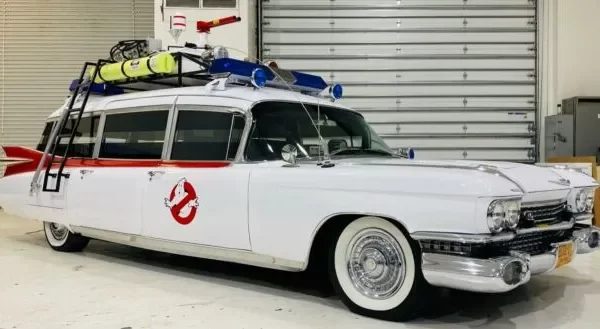
Wayne Works, an Indiana school-bus manufacturer, bought Meteor Motor Car of Piqua in 1954 and A.J. Miller of Bellefontaine in 1956, merging the two rivals as Miller Meteor at Meteor’s Piqua, Ohio plant. From the first 1957 coaches onward, Miller Meteor built exclusively on the Cadillac commercial chassis — and by 1962 had captured half the professional car market in the country. The 1973 EMS Systems Act gutted the passenger-car ambulance business, Cadillac’s 1977 downsizing made the coaches drastically more expensive to build, and Miller Meteor closed on November 1, 1979. The 1959 Miller Meteor Futura combination car gained a second life as the Ghostbusters Ecto-1. The name passed through Collins Industries (1984) and CCE (1993) before landing with Accubuilt in 1999.
EUREKA
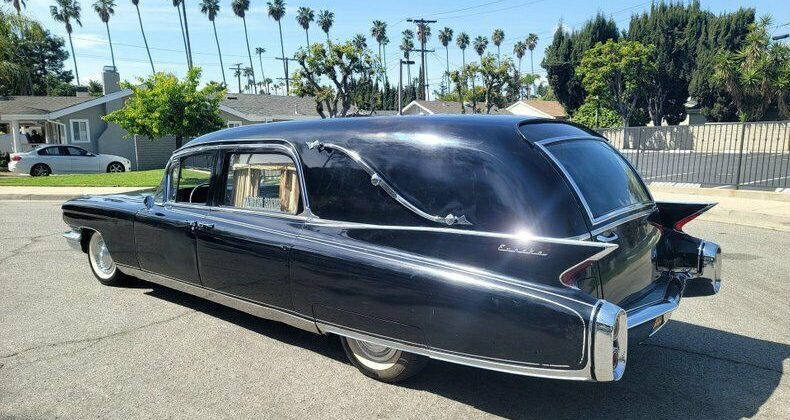
The Eureka Manufacturing Company of Rock Falls, Illinois started in 1871 — as a furniture maker — before applying its woodworking talent to carved horse-drawn funeral vehicles and then motorized coaches. Eureka introduced the limousine-style hearse in the early 1920s and was among the first to build the three-way casket loader in the late 1920s. The Rock Falls plant closed in 1964, ending one of the longest runs of any American coachbuilder. The name lived on: Tom McPherson revived it in Toronto in 1980, CCE Inc. built Eureka-badged coaches in Norwalk, Ohio from 1990, and Accubuilt acquired the brand in 1999.
HENNEY
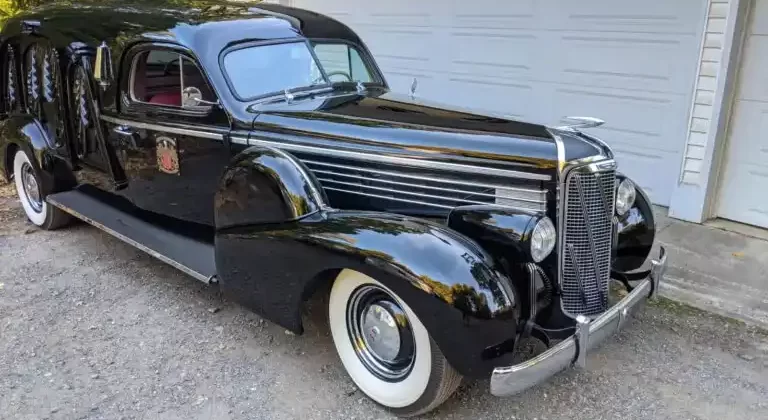
Henney’s carriage-building roots ran back to the 19th century in Freeport, Illinois, and through the middle decades of the century Henney served as Packard’s house coachbuilder. The end came when Packard dropped its long-wheelbase chassis after the 1954 model year — the final Henney Packards rolled out of Freeport that year, and the company was liquidated in 1955. The name resurfaced briefly for the Henney Kilowatt, an early electric car built in Canastota, New York.
FLXIBLE
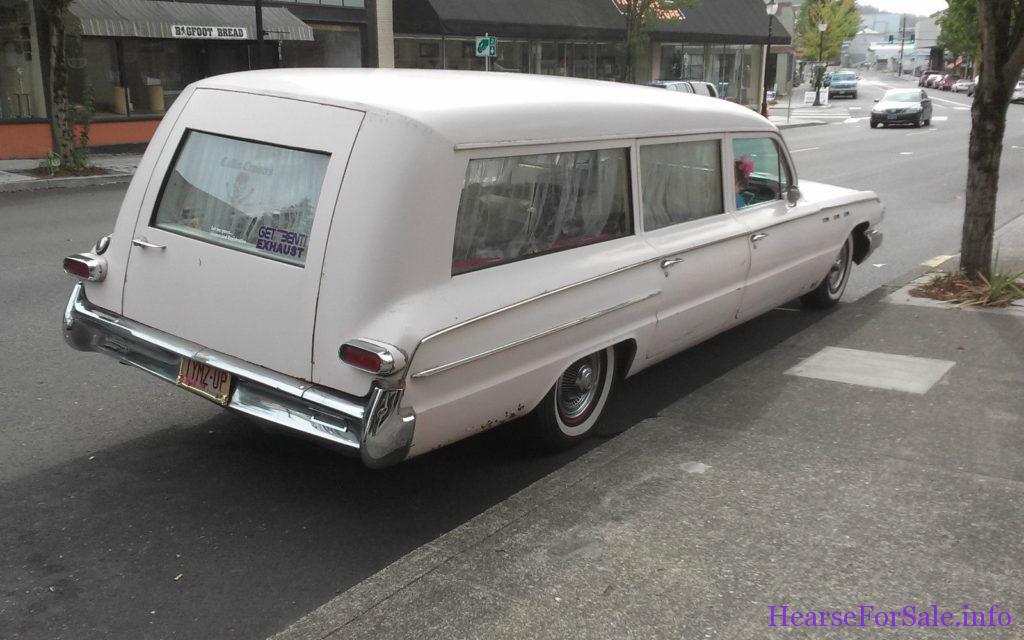
Better remembered for buses, but Flxible of Loudonville, Ohio was a significant builder of hearses, ambulances, and flower cars from the 1910s through the 1960s.
A.J. MILLER
Founded in Bellefontaine, Ohio in 1853 by Amos Miller as a carriage and buggy maker, A.J. Miller built its first hearse around 1870 and was an early adopter of stamped-metal body panels in the 1920s. The firm survived into the modern era before its 1956 sale to Wayne Works ended it as an independent — absorbed into the Miller Meteor merger.
EAGLE
Founded in 1981 by Cleveland professional-car dealers Tony and Bob Mazzarella, Eagle started small — GM wagon conversions in an Amelia, Ohio garage — helped by skilled hands poached from Hess & Eisenhardt. Mike Kellerman bought the firm in 1989 and shifted production to full-size Lincoln and Cadillac funeral coaches. Today Eagle operates under the Federal Eagle Coach banner, paired with the Federal Coach brand — one company offering two lines of Cadillac funeral coaches, and one of the few American hearse builders still manufacturing.
OTHER NAMES YOU’LL RUN ACROSS
Accubuilt (holder of the S&S, Superior, Eureka, and Miller Meteor names today), Krystal Enterprises, Hess & Eisenhardt, Barnette, Economy, and Memphian, plus a long tail of regional conversion shops. Abroad, Britain’s Coleman Milne built funeral coaches on Jaguar and Ford chassis for UK funeral directors, and several other firms serve their own national markets.
DIG DEEPER
The definitive printed histories of every builder above — Walter McCall’s and Tom McPherson’s books — are reviewed in our Hearse Books & References page.
For the full story of the vehicle itself, see History of Hearses.